the full story
For most of my life, I was a perfect example of doing life right. Climbing corporate ladders in tourism, hospitality, marketing. From the outside, I had it all. From the inside, there was only void.
I kept the image everyone expected while quietly drowning. I didn't know who I was, because I'd never asked. I'd given everything to family, to the script everyone hands you. There was no me left to find.
At rock bottom, I did something that changed everything. I made a deck of cards, titled it Let's Play, and sent it out into life — as my CV.
I didn't quit a job. I quit an entire constructed identity. Left money, safety, the home that had defined me. What followed was seven years of wandering, unraveling, rebuilding from nothing.
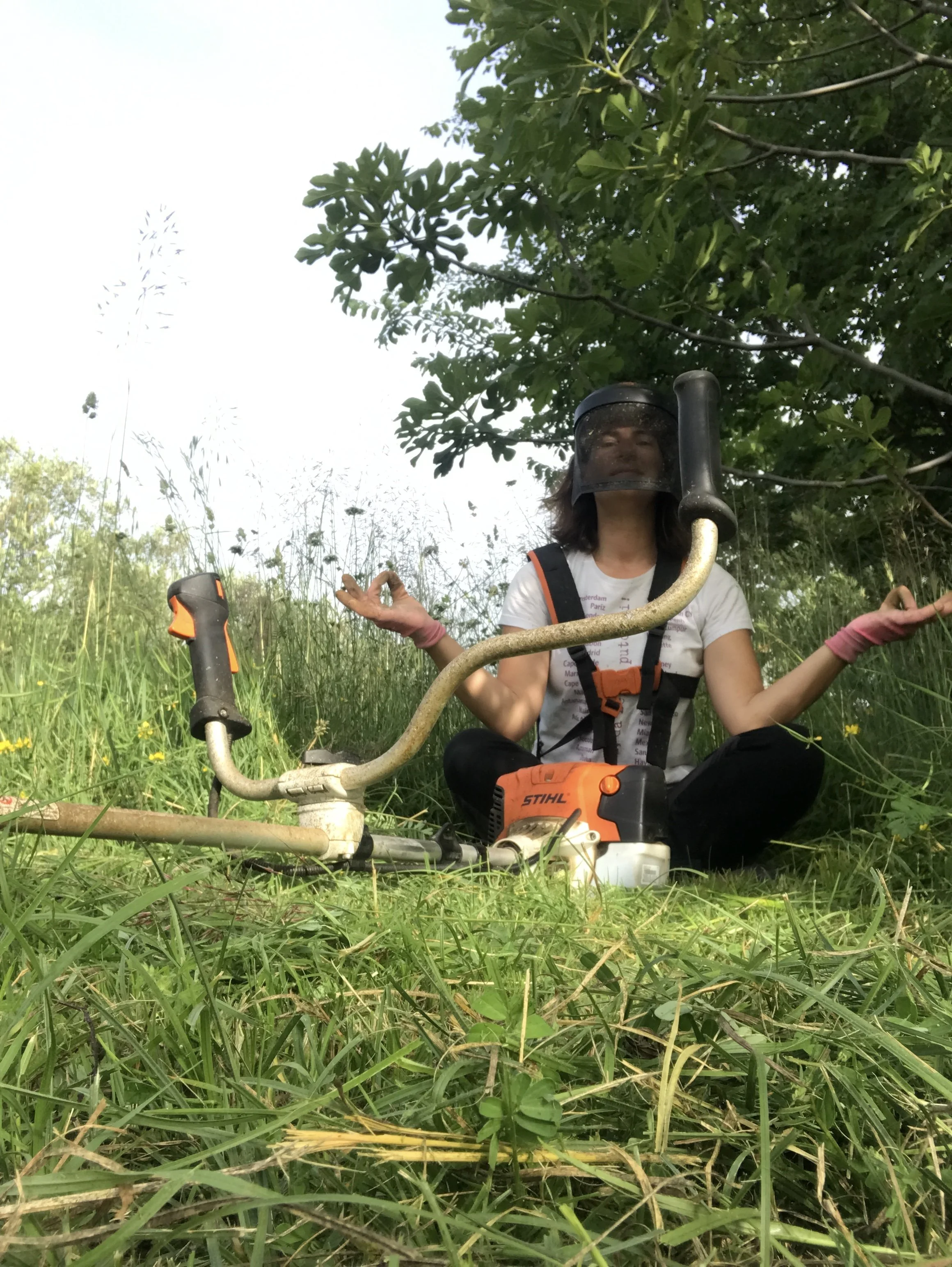
I learned to sew plush toys from secondhand clothes. I trimmed grass. I served tables. I created obsessively. I faced the terror of opening a heart that had been locked shut for years, just to survive. And somewhere in that mess, I woke up.
It was during that time I first used a gift I didn't know I had — synaesthesia. When I made that first deck of cards, I organised myself by colour without quite knowing why. Four colours. Four areas of life. It wasn't a system yet. It was just how I saw myself.
When I finally let go of the life I'd been living, I painted a wooden cube in those same four colours. Each one a dimension of reality — structure, growth, play, love. I'd throw it in moments of uncertainty and ask myself whatever question that colour carried. It became a way of staying in dialogue — with myself, with something larger. I was never really alone.
Soon I started playing with others. But colour alone wasn't enough — people needed words. So I wrote questions, one set per colour. That became Kockica — the first game I ever made. It's now used by therapists across the region, in individual and group work.
More games followed. Different ages, different situations, different depths — all built on the same four-colour structure. I started teaching others how to build their own.
I learned that play isn't frivolous. Play is revolution.
Most therapy stops at understanding — you analyse the pattern, gain the insight, and keep managing life from behind glass. Heart still closed. Mind still in control. I spent seven years learning what comes after understanding: love as the thing that dissolves the separation, play as what's left when you stop defending against your own life.
Today I'm a psychotherapist completing my training, and in practice, developing my own method — I call it LudoTherapy. Healing through play. I work with people who climbed the ladder and found nothing waiting at the top. People who forgot how to play because they were too busy succeeding.
I know both roads — the messy collapse into awakening, which was mine, and the intentional path, which is the one I now offer. They lead to the same place. One is just less painful.
You don't need seven years in the void. That's why this exists.
This is the structure behind everything I do — the four colours, the four seasons, the rhythm underneath being human. Whether it's one conversation or a weekend spent building a game from nothing, it all moves through the same map.
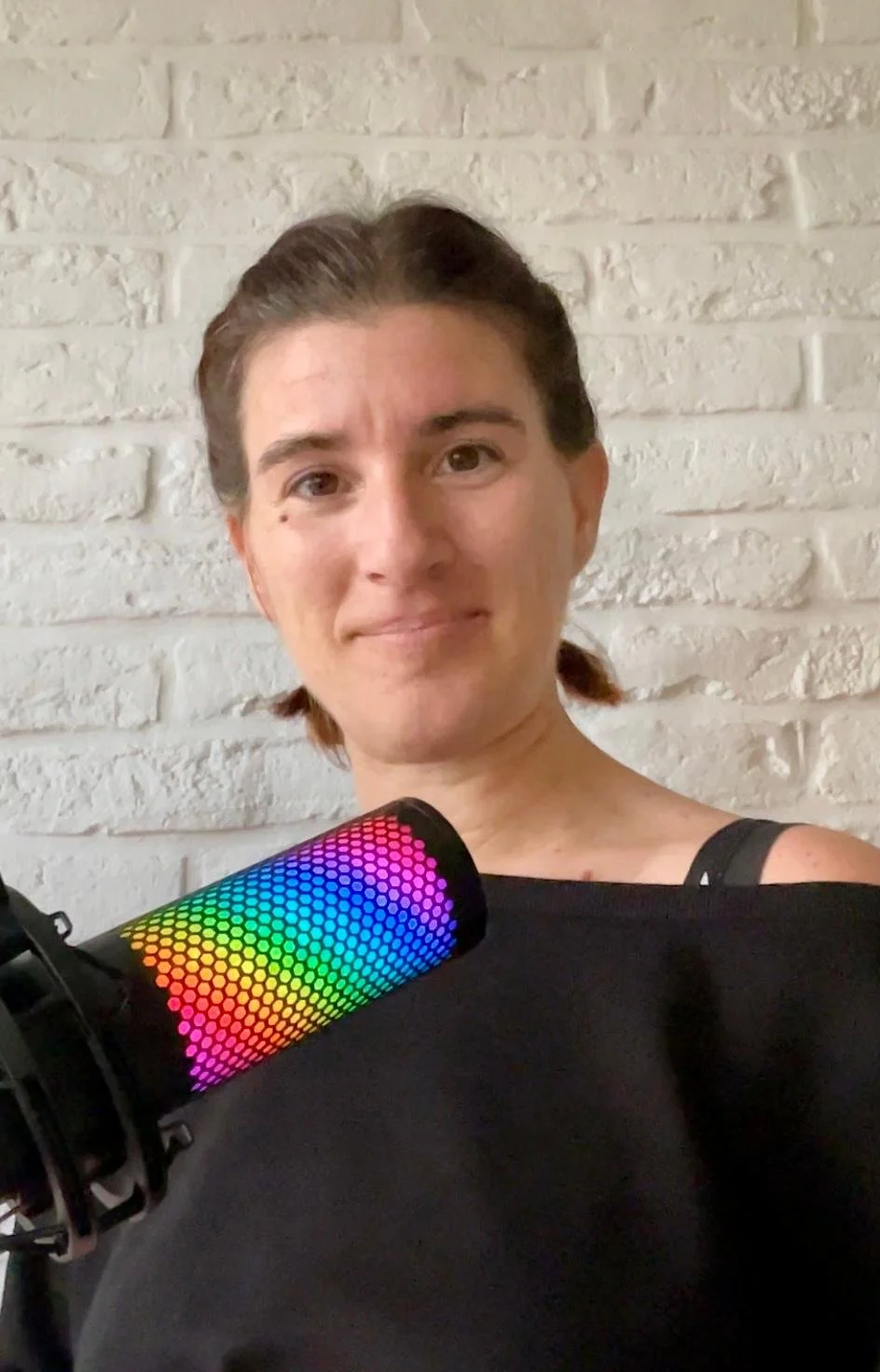
how i play
I'm exploring a simple question: what happens when life is played instead of strategised?
Instead of projects, I create games. Instead of clients, I meet co-players. Instead of chasing outcomes, I make a move and stay open to what comes back.
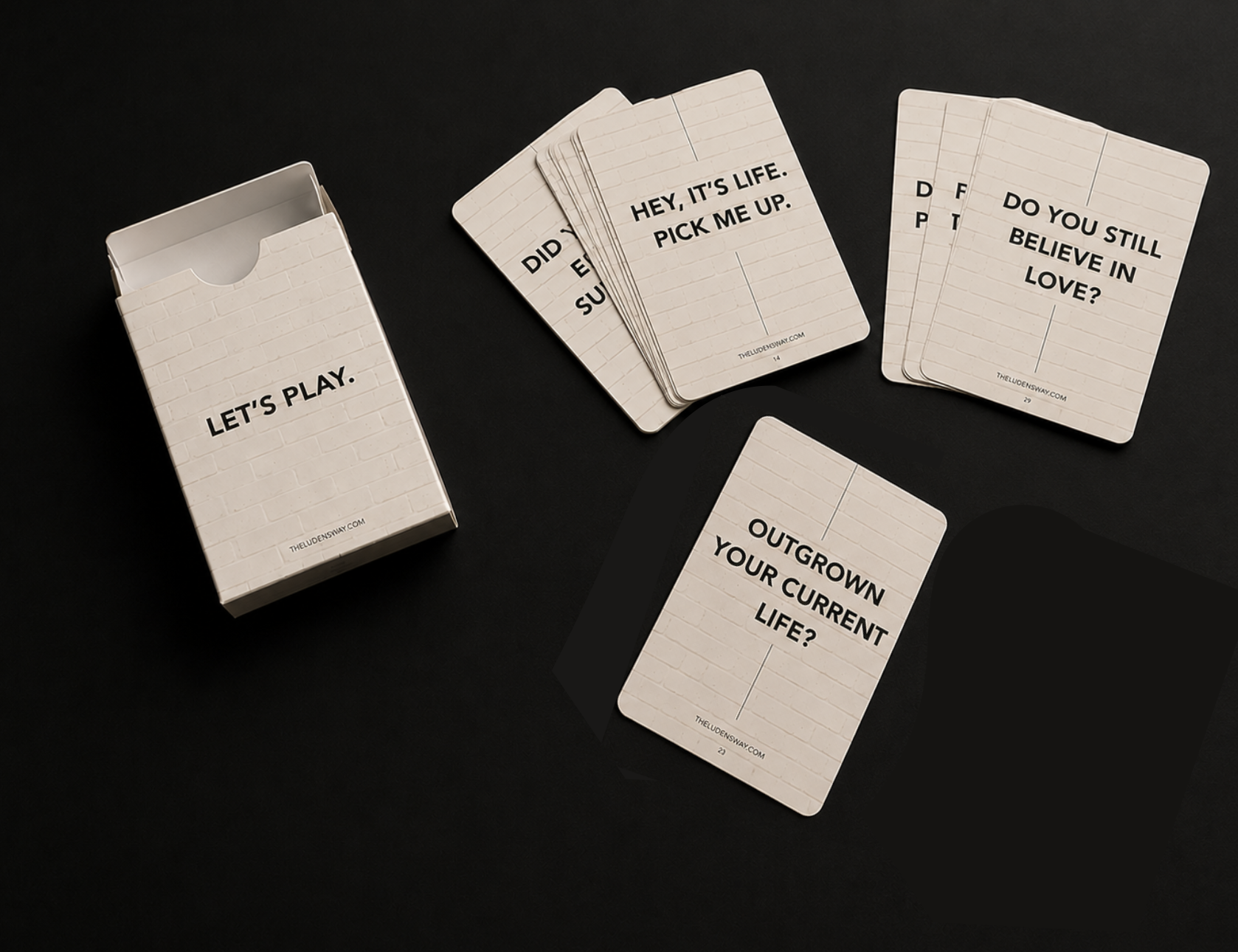
let’s play - 2nd deck
I created 40 cards, each carrying a different question. I leave them around the city I visit and let life decide who finds them.
On the back, people can learn who I am, what I do, and how to contact me. If someone feels called to continue the conversation, they can book an online or in-person session.
I am not attached to the outcome.
Perhaps someone will read a question and keep walking. Perhaps they will stop and think. Perhaps they will reach out. Perhaps we will play/work together. For me, all of these outcomes count.
The experiment is simply this: What happens when a human being leaves small invitations to reflection in the real world and trusts life to do the rest?
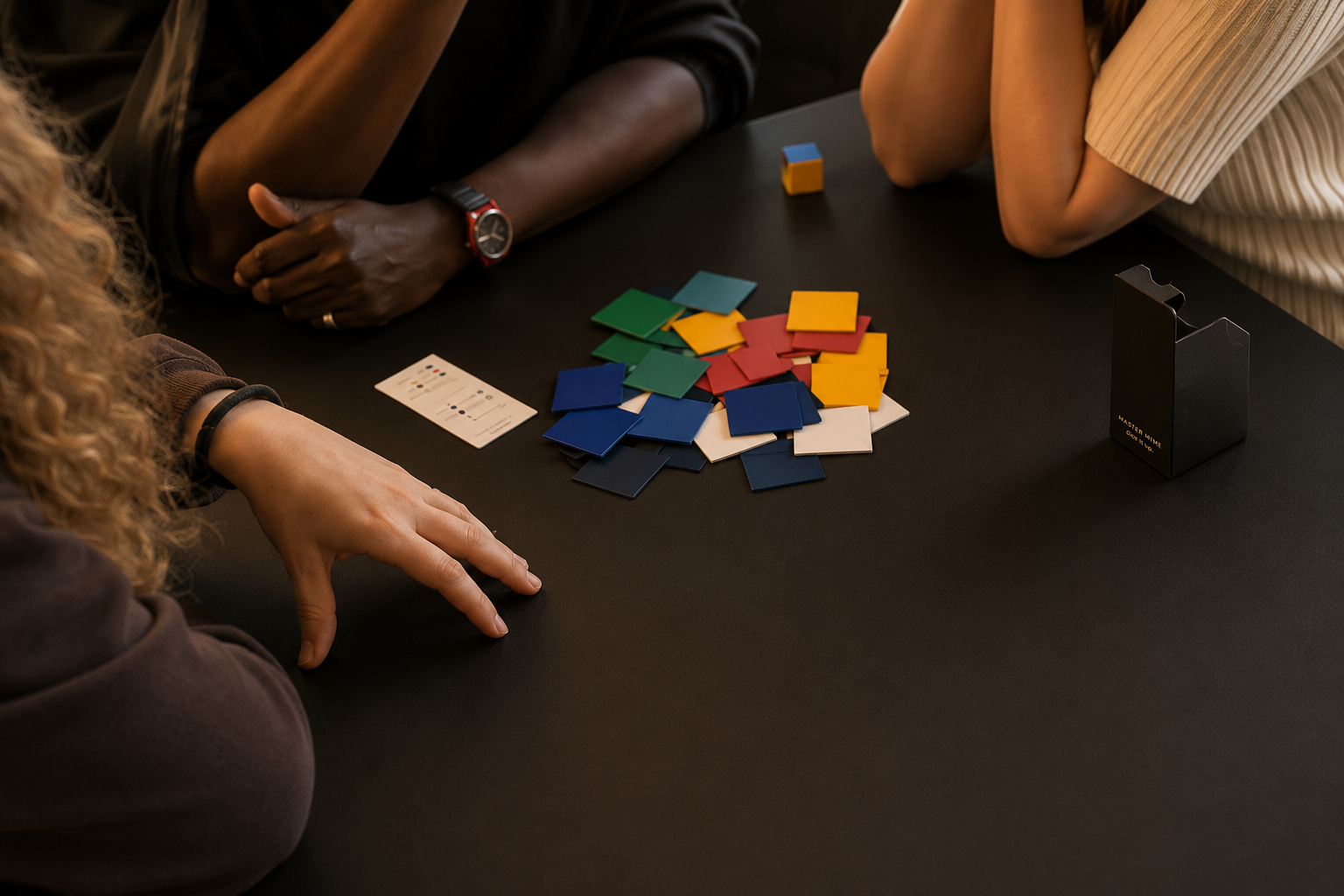
infinite game
Most of life is played as a finite game — you compete, you win or lose, the round ends. Career, status, achievement. Someone keeps score, and eventually, the game is over.
Infinite Game is the opposite kind of game. There's no final winner. No round that ends. The point isn't to win — it's to keep the game going, and to keep changing the rules as you go.
You learn to make a game. Then you teach someone else. They make theirs, and teach another. The game doesn't belong to anyone — it moves, it spreads, it keeps being played.
I travel with it. I go where I'm invited, or where something in me simply says go. I'm paid to exist as exactly what I am — and a more beautiful world keeps showing up as the by-product of that.
Not a game you finish. A game you join.

play your way
This one doesn't have rules. It has rhythm.
I treat existence as a game worth playing — not a game of winning, but a game of participation. I follow curiosity, create invitations, make a move, and let life respond.
Some moves become projects. Some become relationships. Some become businesses. Some become lessons. I'm not trying to control what happens — I'm in dialogue with it. Then I pay attention to what comes back.
I've played my way through addiction, through loss, through every circumstance that tried to convince me I was stuck. Play isn't a break from real life — it's how you get through it. Not a privilege you earn when things are easy. A right you have, especially when they're not.
Some people get pulled into this game without signing up for it. Not chosen by me — brought in by something else. If you've found your way here, maybe you're one of them.
come, play with me.
Fill out the form and let’s build a show-stopping game together.